Facial laxity —a jawline that loses definition, a double chin that appears, a neck that loses tone— is one of the most common reasons for an aesthetic medicine consultation. There are now several non-surgical options, and the useful question is not which one is "the best", but which one fits the degree of laxity, the quality of the skin and what each person expects. Here is a summary of how they work, what the studies say and where their limits are.
In short: mild or moderate laxity can be improved without surgery. Focused ultrasound works on the deep layers and is usually done in one session; radiofrequency and EMFACE, over several; injectables improve skin quality and volume, and threads reposition tissue mechanically. None replaces a facelift when there is a lot of excess skin, and the choice depends on the area, the skin and what you expect.
Why laxity appears
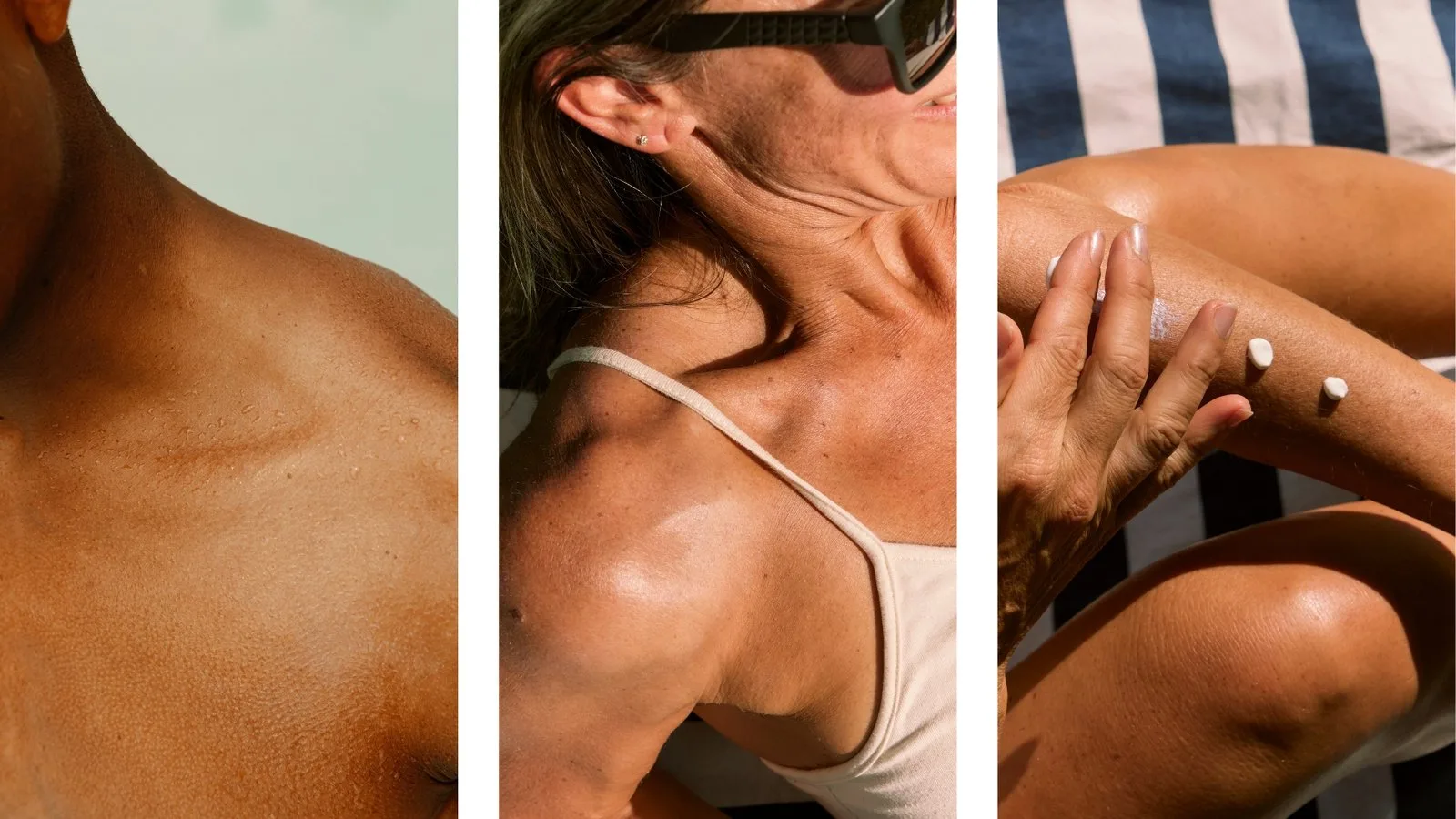
Over the years the skin makes less collagen and elastin, facial fat changes in volume and position, bone remodels and the ligaments that hold the tissues relax. Sun, smoking and weight changes speed this up. Because several layers are involved, no single technique acts on all of them, which is why they are often combined.
The options at a glance
| Technique | Where it works | Usual sessions | When it is assessed | Best suited to |
|---|---|---|---|---|
| Focused ultrasound (HIFU) | Deep layers, including the SMAS | One, with a review | At 3-6 months | Mild or moderate laxity of the jawline, double chin, neck and brows |
| Radiofrequency | Dermis | Several | At the end of the protocol and over the following months | Thin skin or skin lacking firmness, when a moderate change is sought |
| Radiofrequency with muscle stimulation (EMFACE) | Skin and muscle | Several (in the study cited, four, one a week) | Weeks and months after the protocol | Upper and middle face, without needles |
| Injectables and biostimulation | Dermis and volume | Depends on the product | Depends on the product | Skin quality and volume loss that accentuates sagging |
| Thread lifts | Subcutaneous tissue | One procedure | Straight away and over the following months | Repositioning tissue while the skin is still in good condition |
This is a general guide: the number of sessions and when to assess depend on each person and each device.
Focused ultrasound (HIFU)
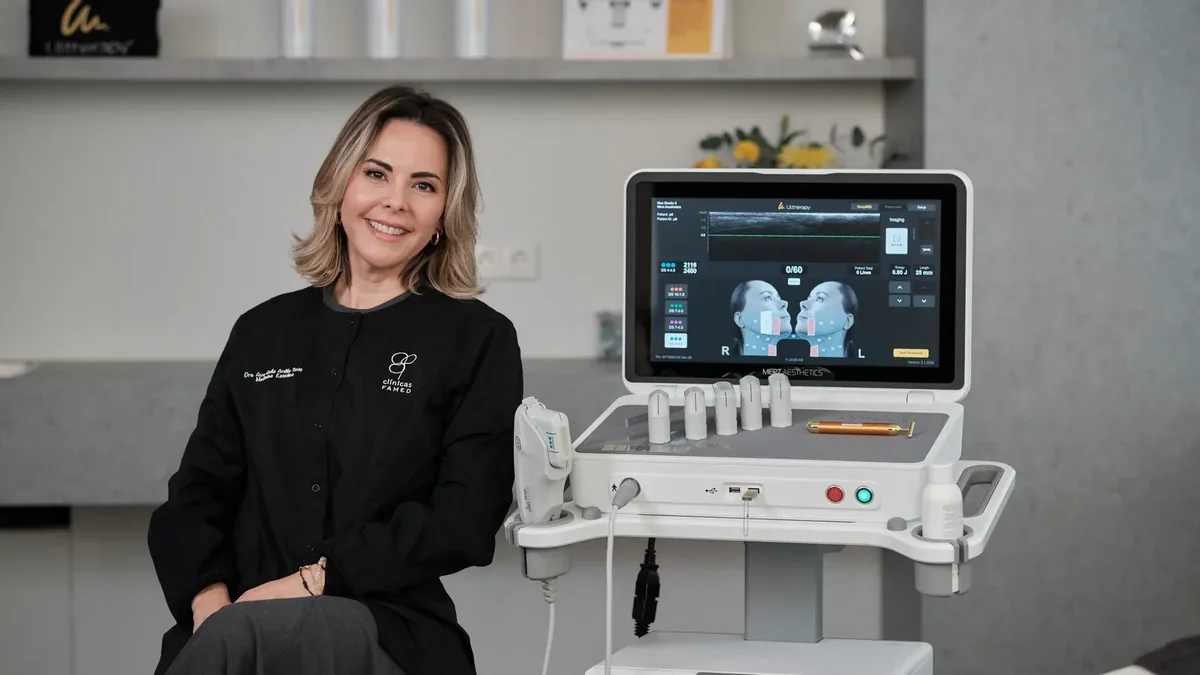
Focused ultrasound concentrates energy at points in the deep layers —including the SMAS, the layer that surgery also works on— and creates small heated zones that stimulate collagen formation. The effect is gradual and is assessed over the following months.
What the studies say: in a prospective study with blinded raters, 30 of 35 patients showed a clinically noticeable brow lift at 90 days, with a mean of 1.7 mm (Alam et al., J Am Acad Dermatol, 2010). A 2025 systematic review of 45 studies describes improvements in laxity mainly in the lower face, neck and eye area, with mild, transient side effects in under 5% of patients, and notes the lack of standardised protocols and long-term data (Haykal et al., Aesthet Surg J, 2025).
In clinic we use Ultherapy Prime, which includes ultrasound imaging to see the layers during treatment.
Radiofrequency
Radiofrequency heats the dermis in a controlled way to stimulate collagen production. It is usually done over several sessions and is more superficial than focused ultrasound. A systematic review of 121 articles found improvements in laxity and elasticity of the face and neck, with higher satisfaction among those looking for a moderate change (Austin et al., Lasers Surg Med, 2022). Some of the devices we use: EXION, Exilis and INDIBA.
Radiofrequency with muscle stimulation (EMFACE)
It combines radiofrequency with high-intensity electrical stimulation of the facial muscles (HIFES). In a prospective study of 37 patients treated on the forehead, the brow rose by a mean of 2.3 to 3.2 mm at 24 weeks, and forehead lines and crow's feet improved (Frank et al., Aesthet Surg J, 2025). It is a recent technology and the published studies are still small and without a control group, so the data should be read with caution. More about EMFACE.
Injectables and biostimulation
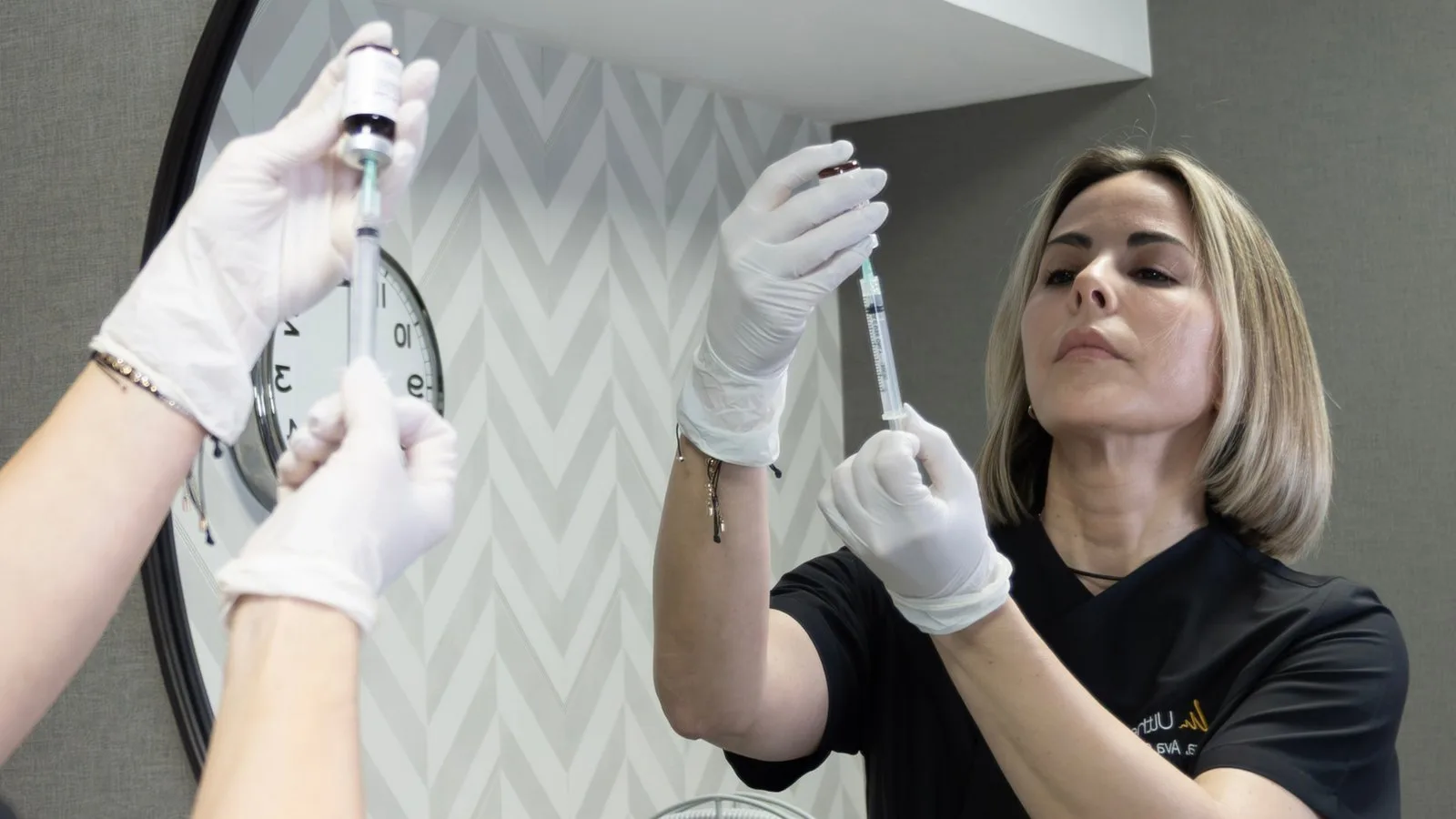
They do not tighten like a lift, but they can improve skin quality or restore volume whose loss accentuates sagging. In a systematic review and meta-analysis published in 2026, co-authored by Dr Ava Guila Ardila, amino acid-enriched hyaluronic acid was associated, across 11 studies, with less severe wrinkles and greater dermal thickness; the authors call for larger prospective studies to confirm this (Mosteirin et al., J Cosmet Dermatol, 2026). Another option for skin quality is polynucleotides.
Thread lifts
They reposition tissue mechanically and stimulate collagen around them. A meta-analysis of 26 studies reports swelling (35%), skin dimpling (10%) and altered sensation (6%) as the most frequent complications, less frequent with absorbable threads, and satisfaction falling from 98% just afterwards to 88% in the long term (Niu et al., Aesthetic Plast Surg, 2021). We cover this in more detail in thread lifts: what they are and when they make sense.
Area by area
Brows and upper eyelid
When the brow drops, the eyelid looks heavier. This is the area where the effect of focused ultrasound and EMFACE has been measured most, with brow lifts of a few millimetres. If what is in excess is eyelid skin, specific techniques are considered, such as Plexr when the excess is mild, or surgery when it is greater.
Jawline
Sagging of the cheek tissue blurs the jawline and deepens the marionette lines. Here a tightening technique (ultrasound or radiofrequency) is usually combined with restoring volume where it has been lost, because a lack of support also accentuates sagging.
Double chin
Before choosing a technique, it is important to tell what predominates: skin laxity, fat or both. If laxity predominates, focused ultrasound and radiofrequency make sense; if fat predominates, the approach is different, and in some cases surgery is what is indicated.
Neck and décolletage
The skin of the neck is thin and shows the passing of time and sun early. As well as tightening, skin quality usually needs work, and daily sun protection is part of the treatment.
Combining techniques
Because laxity affects several layers, it is common to combine a technique that works deep down with another that improves the skin or volume. There is no single protocol that suits everyone: the order and the time between sessions are decided by the doctor according to the technique and each person's response.
What a session is like
With focused ultrasound you feel pulses of heat and small pricks, stronger over bone; no general anaesthetic is needed and you can return to your usual activities, although the area may be a little red or tender for a few days. Radiofrequency feels like intense, gradual heat. With EMFACE you feel the facial muscles contracting together with heat. Injectables and threads are done under local anaesthetic and may leave swelling or small bruises for the first few days.
What the price depends on
On the technique, the areas treated, the number of sessions and whether several are combined. That is why the quote is given after the assessment, once it is clear what suits your case.
When they are not enough
When there is a lot of excess skin, marked fat pads or significant sagging of the neck, no non-surgical technique will give a result comparable to a surgical facelift. In those cases the honest thing is to say so and, if the person wishes, refer them to plastic surgery. There are also situations in which it is better to wait —pregnancy, breastfeeding, active infections, some implants or illnesses— which are reviewed at the assessment.
How the decision is made
The assessment looks at the degree of laxity, the thickness and quality of the skin, volume, medical history and, above all, what you would like to change and how much time you can give it. From there it is decided whether one technique, a combination or none is advisable. Some devices are only available at one of our two clinics: if you are interested in a particular one, ask us before booking.
Frequently asked questions
Which is better for facial laxity, HIFU or radiofrequency?
Neither is better for everyone. Focused ultrasound reaches deeper layers and is usually done in one session; radiofrequency works more on the dermis and usually needs several. The choice depends on the area, the degree of laxity and the skin.
When are the results visible?
With techniques that stimulate collagen the change is gradual and is assessed at 3-6 months. It varies a great deal from person to person.
Do they replace a surgical facelift?
No. They can improve mild or moderate laxity, but they do not remove excess skin. When laxity is marked, surgery is usually the indicated option.
Can I combine several techniques?
Yes, it is common. The doctor decides the order and the time between them.
Where can I have it assessed in Madrid?
At Harmony by Agas, in Coslada and Torrelodones. You can request an assessment through the contact form.
This article is for general information. It does not replace an individual medical assessment.