
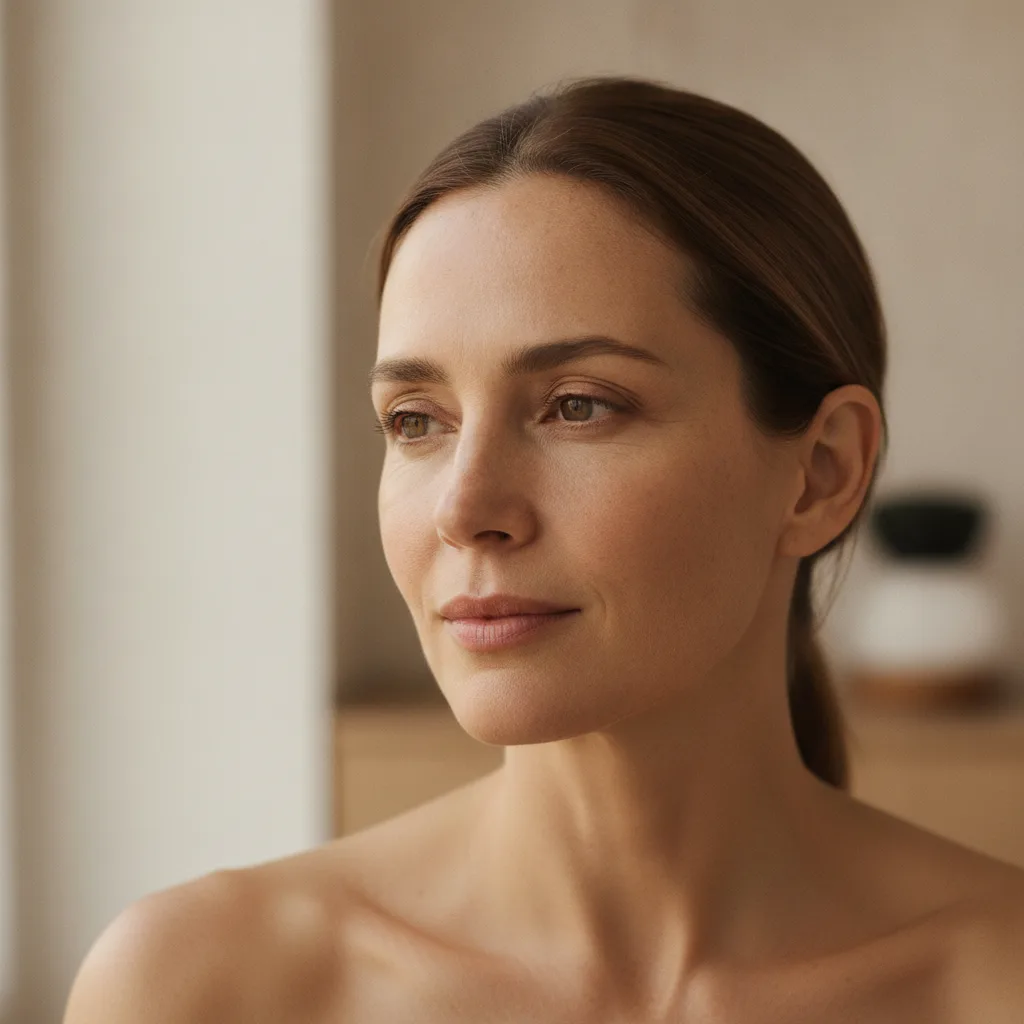
Perfect skin does not exist. And yet we spend our lives looking for it.
In more than twenty years of practice I have heard the same sentence in many different forms: “I don’t want anything to show”. It almost always comes with a photo on a phone. Sometimes it is an actress, sometimes a stranger on Instagram, sometimes a version of the patient herself from fifteen years ago.
And almost always, that photo does not exist as it appears.
The filter trap
We have got used to looking at skin with no pores, no texture, not the slightest relief. Skin with no history. The problem is not the filter itself: it is that we have started using it as a yardstick for something that is a living organ.
Real skin has pores, because it needs to breathe and to eliminate. It has texture, because it is not a plastic surface. It has expression lines, because we have laughed and we have worried. Forty-year-old skin that expressed nothing would not be healthier skin: it would be frozen skin.
What we can genuinely ask of our skin
When we change the question in the consultation, everything else changes. The useful question is not “how do I get perfect skin”, but “how is my skin and what does it need”.
Healthy skin is usually recognisable by concrete, measurable things:
- It is moisturised and does not feel tight after cleansing.
- It tolerates its own cosmetics well, with no stinging or redness.
- It has a more or less even tone, with no pigmentation that is growing.
- It recovers from an insult — the sun, the cold, a spot — within a reasonable time.
- It has daily sun protection, which is the factor that ages skin most and the only one that depends entirely on us.
None of that requires being young. All of it can be worked on at any age.
What aesthetic medicine can and cannot do
Aesthetic medicine can improve the quality of the skin, soften a wrinkle that bothers you, replace volume that has been lost or correct pigmentation. Done with judgement, it makes a person look rested and still look like themselves.
What it cannot do is give a twenty-year-old face back to someone who is fifty, or sustain an expectation built on a retouched image. When that is the request, my job is to say so, not to attempt it.
And that, for me, is the difference between a good result and a bad one: a good one is not noticed, it is recognised.
Ageing is not a failure
Looking after yourself is not refusing to grow older. It is accompanying the process with health, with judgement and without rushing. Skin tells a story; the aim is not to erase it, it is for that story to read well.
If you want to know how your skin really is — beyond what you see in the mirror when you are tired — book a consultation. We start by looking, which tends to be the part people skip.