There is a question I ask in the consultation that almost nobody expects: “how have you been sleeping this past month?”.
I ask it because there are flare-ups that are not explained by the cosmetic the patient has changed, but by what has been going on around her. A house move, a separation, an exam, a bereavement. The skin knows.
What we know about stress and the skin
The skin and the nervous system share an origin: during embryonic development they come from the same layer. That is not a pretty metaphor, it is the reason they stay so closely connected throughout life.
When stress is sustained over time, the body keeps cortisol levels high. And sustained raised cortisol has been linked to several effects that we see in the clinic:
- A skin barrier that works less well, with more water loss and more sensitivity.
- More inflammation, which can worsen conditions such as acne, rosacea or dermatitis.
- Poorer repair: insults take longer to resolve.
- Effects on collagen, which is the structure that supports the skin.
To this we have to add what stress does indirectly: you sleep worse, you eat worse, you drop your skincare routine and, often, repeated habits appear — touching, scratching, clenching the jaw — that leave a mark of their own.
Why rest is not a luxury
A good part of skin repair happens while we sleep. When sleep is shortened or broken up for weeks, that repair is only half done. It is the most frequent explanation for that dull face that does not improve however much serum you put on it.
Put another way: there are results you cannot buy in a bottle.
What mindfulness can contribute
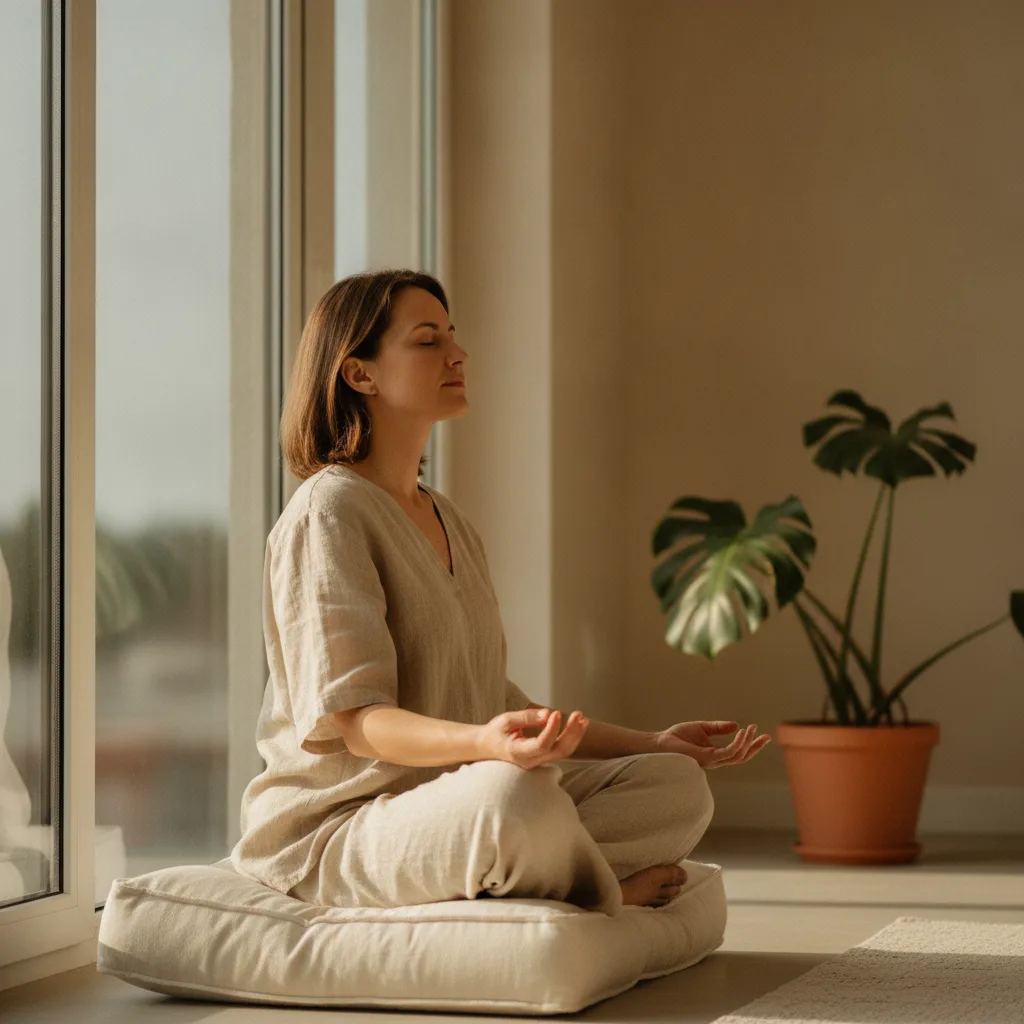
Mindfulness is, essentially, training your attention to come back to the present moment without judging it. It is not a belief and you do not have to sign up to anything. It has been studied as a tool for stress management, and that is where it can help the skin: it does not act on the skin, it acts on what is straining it.
It does not replace any medical treatment. In conditions such as acne, rosacea or dermatitis, the treatment is still the treatment. But pairing that treatment with a sensible approach to stress usually makes the journey easier.
Where to start, without overcomplicating it
What works best is what you can keep up. You do not need an hour a day:
- Five minutes of breathing when you get up or before you sleep, always at the same time.
- A short evening routine that you can manage on a tiring Tuesday, not the one you would put in a photo.
- A real pause in the middle of the afternoon: two minutes with no screen, looking out of the window.
- Steady sleep times, which help more than sleeping a lot on one odd day.
If you notice that your skin has changed over the last few months and you cannot find the reason, it is worth looking at the whole picture: the skin, the routine and also what is going on around you. Book a consultation and we will look at it together.