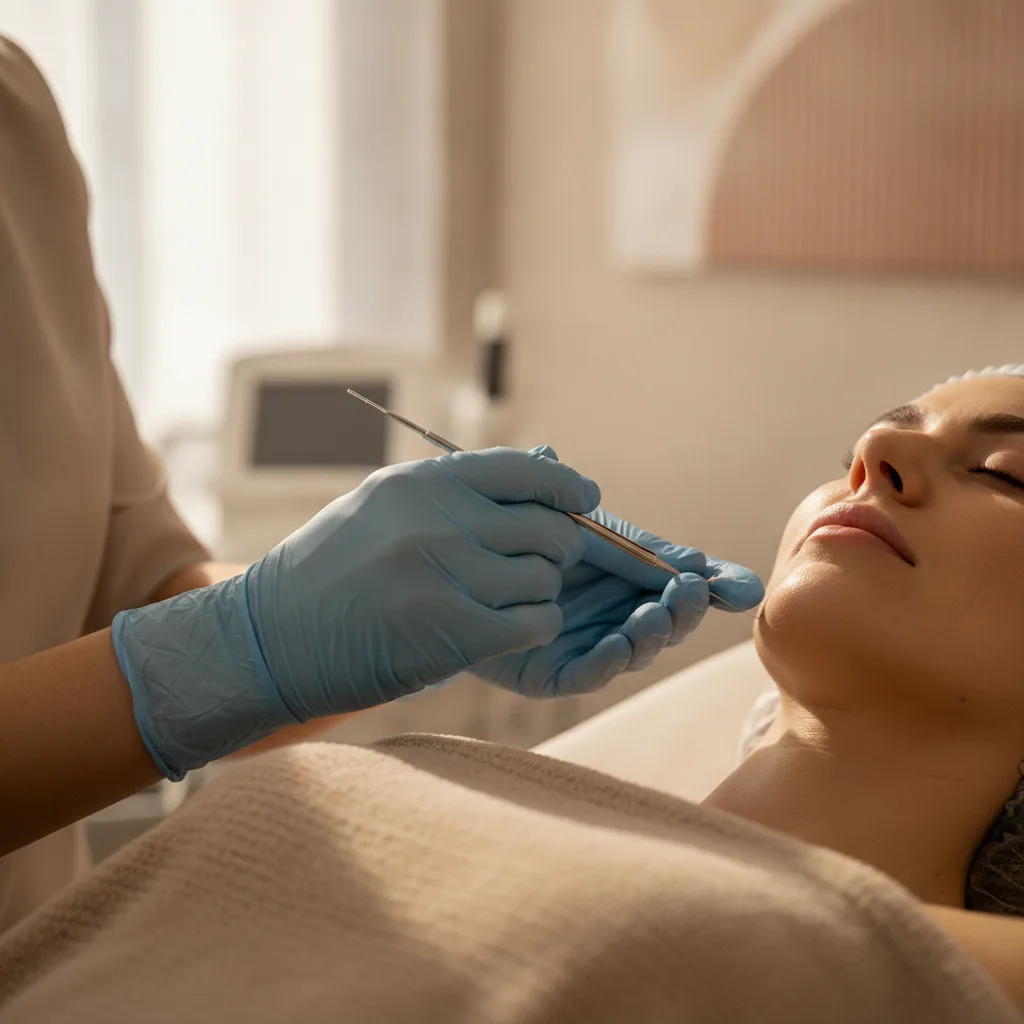
Botulinum toxin is one of the best-known aesthetic medical treatments for softening expression lines and achieving a more rested, fresh and natural-looking face. Even so, it still raises plenty of questions: does it paralyse the face? how long does it last? does it show too much? when is it a good time to start?
At Harmony by Agas, the answer always begins with a personalised medical consultation. Botulinum toxin should not be applied automatically, nor in the same way on every face. Its aim is not to erase expression, but to relax certain muscles in a controlled way in order to improve the appearance of dynamic wrinkles without losing a natural look.
What botulinum toxin is
Botulinum toxin is a purified substance used in aesthetic medicine in very small, controlled doses. Its main function is to reduce temporarily the activity of certain facial muscles.
This makes it possible to soften the wrinkles that appear from repeated movements, such as frowning, raising the eyebrows or smiling. That is why it is used particularly in areas where wrinkles are dynamic, that is to say, where they form through muscle movement.
How botulinum toxin works on the face
Botulinum toxin works by temporarily blocking the nerve signal that reaches the treated muscle. As that muscle relaxes, the skin above it stops folding so intensely and expression lines soften gradually.
The result does not appear straight away. It is usual to start noticing changes within a few days, with a more complete effect at around two weeks. The effect is usually temporary, so the treatment has to be planned individually according to each patient’s response.
Areas where botulinum toxin is usually applied
In facial aesthetic medicine, the most common areas are:
- Between the brows, to soften an angry or tense expression.
- The forehead, to improve horizontal lines.
- Crow’s feet, to soften wrinkles around the eyes.
- The eyebrows, when a more open-looking gaze is wanted.
- The chin or a gummy smile, in selected cases.
- The neck, when there is an appropriate medical and aesthetic indication.
The key is not to treat for the sake of treating. Each area has to be assessed according to the anatomy, the muscle strength, the natural expression and the result the person wants.
Botulinum toxin for expression lines
Expression lines appear through the constant repetition of facial movements. At first they only show when you gesture, but over time they can become marked even at rest.
Botulinum toxin can help to:
- Relax the facial expression.
- Soften dynamic lines.
- Prevent certain wrinkles from deepening.
- Achieve a more rested appearance.
- Keep a natural expression, if it is applied with judgement.
The aim is not a rigid face. A good application should let the face carry on communicating, but without the muscle contraction being so intense.
Does botulinum toxin change your face?
It should not. When the treatment is correctly indicated and applied by a medical professional, botulinum toxin does not change the features or alter the volumes of the face.
Its function is not to fill, to add volume or to transform features. There are other treatments for that, such as hyaluronic acid, which have different indications.
Botulinum toxin works on muscle movement. That is why the ideal result is that “you look well” effect that is noticed without being obvious. In other words, the comment you are after is not “what have you had done?”, but “you look so rested”.
When this treatment is recommended
Botulinum toxin may be recommended when a person has dynamic wrinkles or very marked movements in areas such as the forehead, between the brows or around the eyes.
It can also be considered preventively in patients who are starting to notice that certain lines are becoming more marked, always provided there is a medical indication and realistic expectations.
At Harmony by Agas we assess:
- Age and condition of the skin.
- Muscle strength.
- Type of wrinkle.
- Facial symmetry.
- Previous treatments.
- The patient’s goal.
- How natural the expected result should look.
Not everyone needs the same amount or the same areas. In aesthetic medicine, less improvising and more diagnosis.
How long the effects of botulinum toxin last
The duration can vary depending on each patient, the area treated, the dose, the muscle strength and individual metabolism. Generally speaking, the effect usually lasts for several months.
As time passes, muscle activity gradually returns. That is why, if you want to maintain the result, it is best to plan regular reviews and to avoid applications that are too frequent or done without judgement.
Aftercare following the treatment
After botulinum toxin has been applied, the doctor will give specific guidance according to the case. Generally speaking, during the first few hours it is usually recommended that you:
- Do not massage or press the treated area.
- Avoid intense exercise.
- Do not use a sauna or other sources of intense heat.
- Do not lie down immediately after the session, if the professional advises this.
- Follow the medical recommendations given in the consultation.
Minor discomfort, redness or the odd small bruise may appear at the injection site. These are usually mild, temporary effects.
Safety: why it has to be applied by a medical professional
Although it is a very well-known treatment, botulinum toxin is a medical procedure. It requires anatomical knowledge, facial diagnosis, dose management and experience in the application technique.
A poor indication or poor technique can produce asymmetry, a dropped eyebrow, a heavy eyelid, an altered smile or results that do not look natural. That is why choosing the right professional matters as much as choosing the treatment.
At Harmony by Agas, it is applied after a personalised medical consultation, so that the treatment fits each face and the natural expression is preserved.
Botulinum toxin at Harmony by Agas
Botulinum toxin can be an excellent option for softening expression lines, relaxing the face and achieving a fresher look without losing your identity.
At Harmony by Agas we work with a medical, cautious and personalised approach. We analyse the facial anatomy, the movement, the expectations and the harmony of the face before recommending any treatment.
The aim is clear: natural-looking, safe results, adapted to you.
Book your consultation at Harmony by Agas and find out whether botulinum toxin is the most suitable treatment for your face.
Summary: what you should know about botulinum toxin
Botulinum toxin is an aesthetic medical treatment that temporarily relaxes certain facial muscles in order to soften expression lines. It is used mainly between the brows, on the forehead and on crow’s feet, although it can have other indications depending on the medical assessment.
At Harmony by Agas we carry out a personalised consultation to establish whether this treatment is suitable, to define the areas to be treated and to achieve a natural, safe and harmonious result.
Frequently asked questions about botulinum toxin
Does botulinum toxin leave the face rigid?It should not. When it is applied with medical judgement, the result should look natural and allow facial expression. Rigidity tends to appear when there is too much product or poor planning.
When do you start to notice the effect?The effect usually starts to be noticeable within a few days and reaches its fullest result at around two weeks.
How long does botulinum toxin last?The duration varies from one patient to another, but it usually lasts for several months. After that, muscle movement gradually returns.
Can it be done in summer?Yes, it can be done in summer if there is a medical indication. Even so, you should follow the aftercare advice and avoid intense heat or strenuous exercise during the first few hours.
Does botulinum toxin fill wrinkles?No. Botulinum toxin relaxes the muscle responsible for certain expression lines. It does not add volume. For replacing volume there are other treatments, such as hyaluronic acid.
Who should apply botulinum toxin?It should be applied by a qualified medical professional, with anatomical knowledge and experience in facial aesthetic medicine.